Cognitive Agents in Enterprise Integration
Moving beyond API orchestration to semantic understanding
Quick Take
The next generation of enterprise integration isn't about connecting endpoints—it's about systems that understand intent and adapt to context.
Cognitive Agents in Enterprise Integration
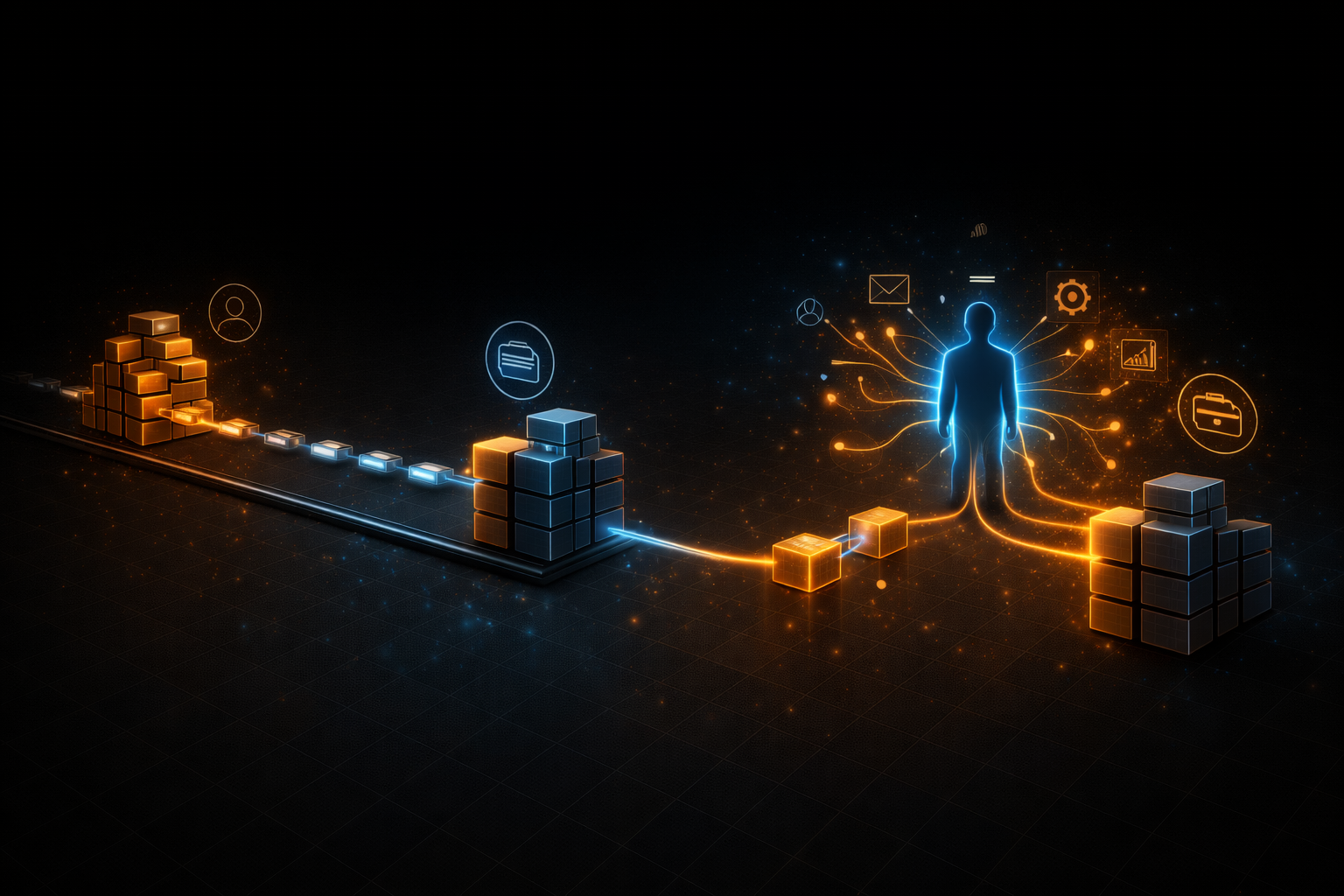
Traditional integration platforms treat data as packets to route. Cognitive agents treat data as meaning to interpret.
The Limitations of Traditional iPaaS
Integration Platform as a Service solved the point-to-point spaghetti problem. But they introduced new constraints:
- Rigid mapping logic that breaks with schema changes
- No understanding of business context
- Manual intervention required for edge cases
What Cognitive Integration Looks Like
Semantic Understanding
Instead of field-to-field mapping, cognitive agents understand the meaning of data. A "customer" in System A maps to a "client" in System B not because of explicit rules, but because the agent understands the semantic equivalence.
Contextual Adaptation
When an integration fails, cognitive agents don't just retry—they diagnose. They understand why the failure occurred and can often self-correct or escalate with meaningful context.
Intent-Driven Orchestration
Rather than following fixed workflows, cognitive agents understand the goal of an integration and can find alternative paths when the primary route is blocked.
Case Study: Financial Services Firm
A mid-market financial services firm replaced their traditional integration layer with a cognitive agent architecture. Results after 6 months:
- 73% reduction in integration maintenance hours
- 89% of schema changes handled automatically
- Mean time to resolution for integration issues dropped from 4 hours to 12 minutes
The shift from mechanical to cognitive integration is not incremental—it's architectural.